Olympus E Zuiko Auto S 38 28 Review
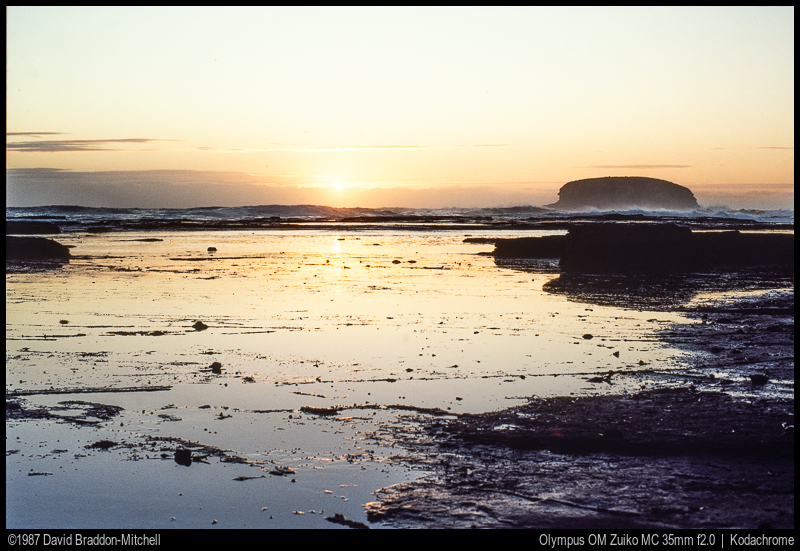
Yoshihisa Maitani's Olympus OM system was a remarkable achievement, with beautifully engineered smaller bodies and exquisite pocket-size lenses, oft as good or ameliorate than larger lenses from the competition. They are all nicely engineered and a joy to use. This makes them very tempting options for someone who wants to explore them on a modern total frame camera, or for someone who wants to experiment with moving picture. I was an OM organization user dorsum in the days of picture show, so yous'll run into a few samples from me that are from OM flick cameras, also every bit digital. In this guide Juriaan, Phillip and I will have you through the lenses with comments about how they perform, and whether they make sense adapted to Sony full frame digital cameras.
Many of the samples are pic era images taken from my (David's) personal archives. We don't therefore pretend that they illustrate the technical qualities of the lenses, but they practice give yous an idea of the creative possibilities of them.
Except for a few late era lenses, they won't resolve quite also as the best expensive modern lenses, or be as equally contrasty every bit the latest Zeiss or GM glass. But many are shut and nonetheless extremely good, and others have a look which nosotros sometimes relish as an alternative to the virtually perfection of some contempo glass.
Contents
- Some factors to consider in choosing classic lenses
- 1. Are you basically looking for a high resolutions transmission lens for a good price?
- 2. Are you looking to make full a gap that's non currently filled?
- 3. Are you looking for the "expect" of an older lens?
- 4. Let'southward be honest. Are you collecting?
- A trivial history of OM lenses.
- Zuiko Prime number Lenses: A Nautical chart
- Lenses in the guide
- Olympus Zuiko Fisheyes and 18mm.
- Olympus Zuiko 21mm f3.5
- Olympus OM Zuiko MC 24mm f2.8 (Phillip)
- Olympus OM Zuiko 24mm f2.8
- The Fast Super Wides: ii/21 and ii/24
- Olympus Zuiko MC 28mm f2
- Olympus Thousand.Zuiko 28mm f3.v
- Olympus OM Zuiko 28mm f2.8
- Olympus OM Zuiko MC 35mm f2
- Olympus OM Zuiko 35mm f2
- Olympus OM Zuiko 35mm f2.8
- Olympus OM Zuiko SHIFT 35mm f2.8
- Olympus Zuiko 50mm f1.two
- Olympus G.Zuiko 50mm f1.iv
- Olympus Zuiko 50mm f1.4
- Olympus F.Zuiko 50mm f/i.8
- Olympus Zuiko 50mm f1.viii
- Olympus Zuiko 50mm f2 Macro
- Olympus Zuiko MC 50mm f3.5 Macro
- Olympus G.Zuiko 55mm f1.two
- Olympus F.Zuiko 85mm f2.0
- Olympus Zuiko 85mm f2.0
- Olympus OM Zuiko 90mm f2
- Olympus OM E.Zuiko 100mm f2.8
- Olympus OM Zuiko 100mm f2.eight (Phillip)
- Olympus OM 100mm f2 (Phillip)
- Olympus OM Zuiko 135mm f3.5
- Olympus Zuiko MC 135mm f2.eight
- Olympus Zuiko MC 200mm f4
- Olympus Zuiko 200mm f5
- Olympus Zuiko 180mm f2 (Bastian)
- Olympus Zuiko 250mm f2 (Bastian)
- Olympus Zuiko 350mm f2.8 (Bastian)
- Olympus Zuiko Sometime-Style Telephoto lenses
- Endmost Remarks
- Other Articles
-
-
- David Braddon-Mitchell
- Latest posts by David Braddon-Mitchell (see all)
-
-
Some factors to consider in choosing classic lenses
There are many factors you need to take into account when buying older lenses, all of which are related to the reason you are doing information technology. You might desire to salvage money, y'all might be sentimentally fastened to an former brand, you might like the unique look some of these optics offer, yous might be a collector at heart. Let's think nigh how getting clear about your motivations might touch the decision you make.
i. Are yous basically looking for a loftier resolutions transmission lens for a good cost?
This is a good reason for buying classic glass. But y'all demand to be a fleck careful. There are a number of OM lenses which are competitive with the best modernistic glass – the two/50, two/90 and 2/100 as well as the superteles spring to mind. But they are very expensive, then much so that y'all are probably better off, if operation is all you intendance about and you want manual focus, spending a fiddling more than for a modern CV or Zeiss lens. Of course those lenses have other features that you might care about besides.
The coin saving motivation really applies mostly to less expensive lenses some of which are nonetheless notwithstanding very sharp.
2. Are yous looking to fill a gap that's not currently filled?
Sometimes there are lenses in a genre for which there is no mod equivalent withal. In that location are no modern smaller medium tele lenses. If y'all desire a compact tele for occasional use, and so an adapted OM might fit the beak. They are more often than not pretty good (though when at that place are finally modern ones they will be better).
iii. Are you looking for the "await" of an older lens?
In this case you lot volition care less virtually the absolute resolution and more nigh the rendering, so long as performance is decent. Some people may fifty-fifty adopt the older versions with single coating for artistic flare and and then forth.
four. Let'southward be honest. Are you collecting?
Using older lenses can be kind of an excuse to collect. Nothing wrong with that, but probably information technology's a good thought to be articulate what your motivation is! If yous are collecting you'll intendance more than about status. If yous are but using the lens, then a cosmetically fair sample with clean drinking glass will salvage you a lot of money.
A piffling history of OM lenses.
OM lenses when through a number of changes over the years. The earliest modify was merely cosmetic: when the M-System became the OM system, because of trademark issues with Leica. Simply later changes sometimes coincided with changes in the optics and coatings. Information technology's pretty clear that Olympus updated the optical design at least once over the OM era for many of these lenses, as well equally having at least three generations of coatings. Sometimes the optical changes are obvious: the number of elements or groups changes, and so it must have been redesigned. But in that location are other optics that must besides have been redesigned if you pay shut attention, because the overall size of the lens has altered enough that it couldn't exist exactly the same formulation. It's hard to be certain exactly when in the production run this happens though. Dissimilar some makers, Olympus never advertised Mk Ii!
The coatings went through at least three eras that we know of. The commencement era was when the lenses had silver "noses". Most lenses of this era were single coated, though some had early multicoating. At some point the silver ring on the forepart disappears and the lens torso is all black. We think, only aren't sure, that this doesn't coincide with any of import deviation. Information technology does however hateful that any all black lens is newer sample than a silverish one. In both of these eras the "Zuiko" brand on the lens band is preceded past a letter which tells yous how many elements the lens has: eg Due east.Zuiko for a five element lens, and F.Zuiko for a vi element lens and and then on.
The side by side era was when gradually all the lenses because multicoated and had "Zuiko MC" written on the lens ring.
The final era, when all lenses still in production were multicoated, was when the lens was simply marked "Zuiko". This coincides with a new lens coating they advertised as "NMC". How much if at all better it is than the previous era nosotros aren't certain. Both are noticeably better than the non-multicoated era for surpassing glare and flare and generally maintaining dissimilarity.
The last years of OM produced some extraordinary lenses that were, we think, better than most of the contemporary lenses of their grade, and almost as adept as the latest modern designs. This set included the 50mm f2 macro, the 90mm f2 macro, the 100mm f2 and the white superteles: 2/180, 2/250, ii.8/350 and 2.8/350.
Zuiko Prime Lenses: A Chart
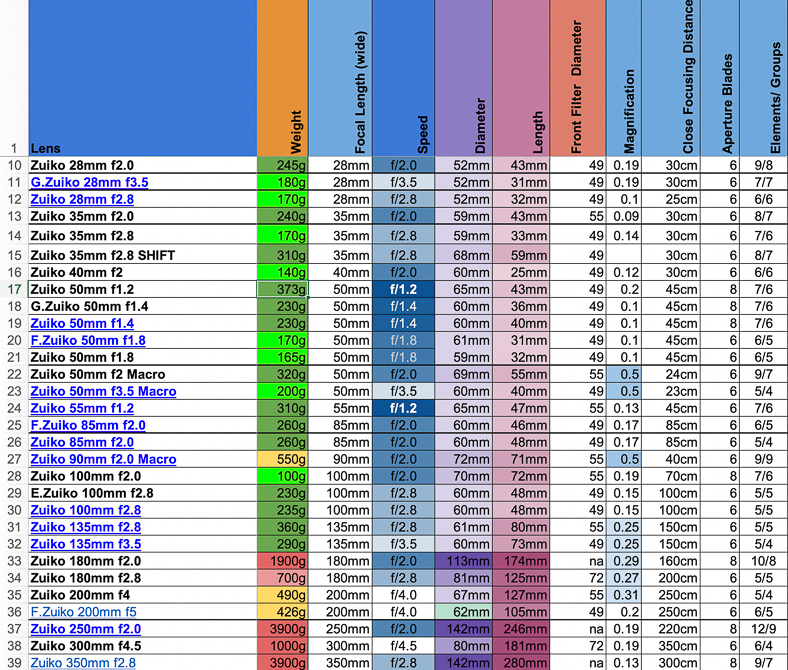
Hither are some of the key features of the Zuiko primes.
A few things to notation
(one) At least one of u.s.a. has used, even if briefly, all the lenses listed
(ii) No zooms are listed. Classic zooms are rarely good, though in that location are a couple of involvement in the OM lineup we may discuss later.
(3) Nothing over 350mm is listed. The older lenses longer than 350 mm are absurdly large and slow (typical for their age though)
(4) We take listed simply 1 entry for each lens except in cases where we are sure there was an optical redesign of a later version. When we only list one version nosotros merely depict it every bit "Zuiko". When we listing different versions we use eg. F.Zuiko for the older one, "Zuiko" for the later on, and practise not distinguish between "Zuiko" and the slightly earlier "Zuiko MC". When we list only one version, the weight and dimensions are for the oldest housing. Later versions were ordinarily just a fiddling bit longer and heavier, due to very slight changes in the housings.
We haven't listed zooms here, nor have we listed specialty lenses which don't connect directly to camera, just require bellows or other attachments.
Lenses in the guide
The lenses we hash out at present are mostly ones nosotros have used fairly extensively and have samples. Ones none of us take e'er used nosotros are usually exit out or discuss briefly with no sample. When we take used two versions of a lens, and take samples, we list both versions. The samples and opinions are by David, unless it says otherwise.
The indicative prices are for lenses in good status if y'all are are patient and wait around or effort auctions. If yous desire perfect collectible condition, or want i really speedily, you may have to pay more.
Olympus Zuiko Fisheyes and 18mm.
None of u.s.a. has used either of these extensively enough to have an first hand opinion virtually their quality. The 18mm has quite a proficient reputation, but is quite expensive. We would be surprised if it was as optically adept equally fifty-fifty a modernistic zoom covering the range, but it is compact, and dissimilar many legacy 18mm lenses probably gives adept enough quality to not distract from the images if yous are shooting motion-picture show.
two.eight/eight fisheye | 640 | $800 | Ebay.com (affiliate link)
two.8/xvi fisheye | 180g | $550 | Ebay.com (chapter link)
3.5/eighteen | 250g | $700 | Ebay.com (affiliate link)
Olympus Zuiko 21mm f3.5
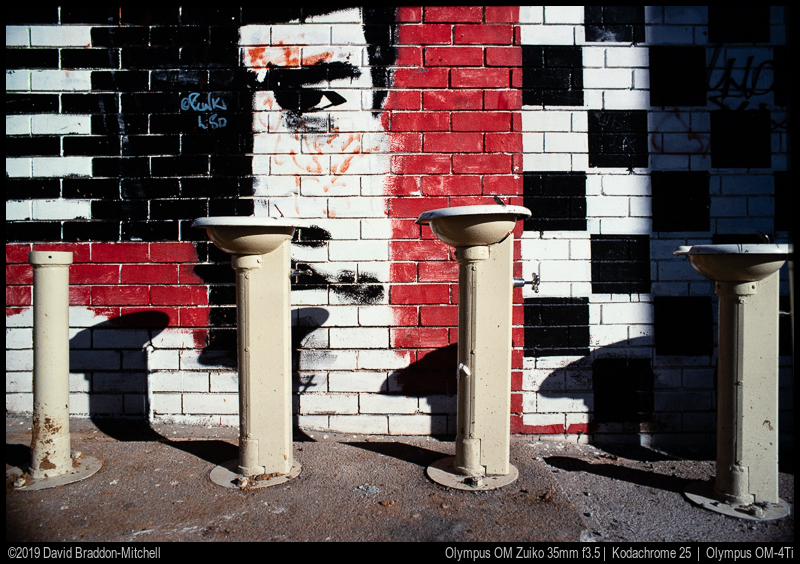
Condition: Owned and used extensively past David in the film era. Not part of current kit.
- Usable resolution and dissimilarity
- Loftier vignetting, peculiarly wide open
- moderately high distortion
- Pocket-size and lightweight
A small and lightweight prime lens which for a while was a favourite for people adapting lenses for mirrorless because there were no issues with the sensor stack. It's a expert little performer and fun to use, but it'due south not enough cheaper than the CV 21/35 to be a first recommendation for a compact 21mm. Equally far as we know the different versions of this lens are differences in coatings just.
185g | $250 | Ebay.com (chapter link)
Olympus OM Zuiko MC 24mm f2.8 (Phillip)
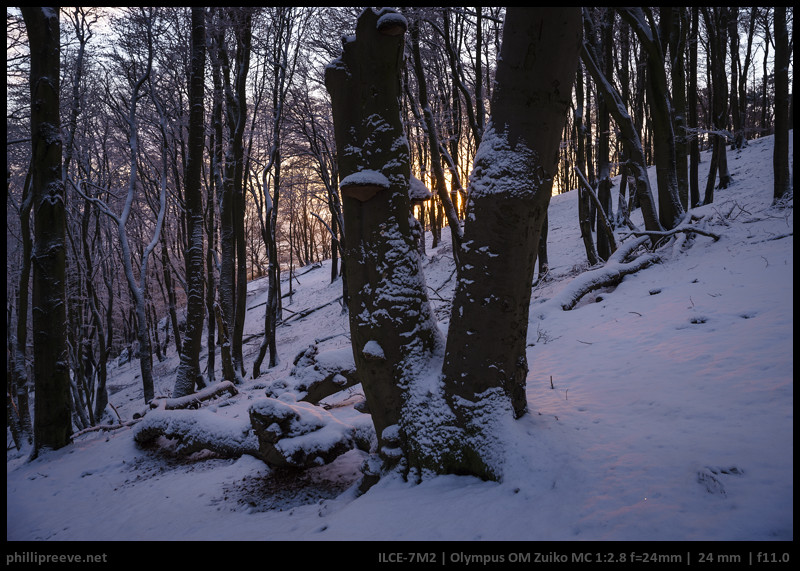
Status: Used on Sony a7II for about a year by Phillip. Sold since.
- A tiny lens
- Abrupt across the frame by f/8
- Weaker flare resistance
- Very loftier vignetting, even stopped downwardly
- Relatively affordable
The Olympus 24mm f2.8 has some shortcomings like weaker flare resistance and stronger vignetting which limit the applications you can utilise it for but it shares those with nigh other wideangles of its era. Since information technology is rather cheap and very pocket-sized information technology can still brand good sense in your kit because it performs very well if you lot aren't likewise crazy well-nigh taking backlit images.
180g | $100 | Review | Ebay.com (affiliate link)
Olympus OM Zuiko 24mm f2.8
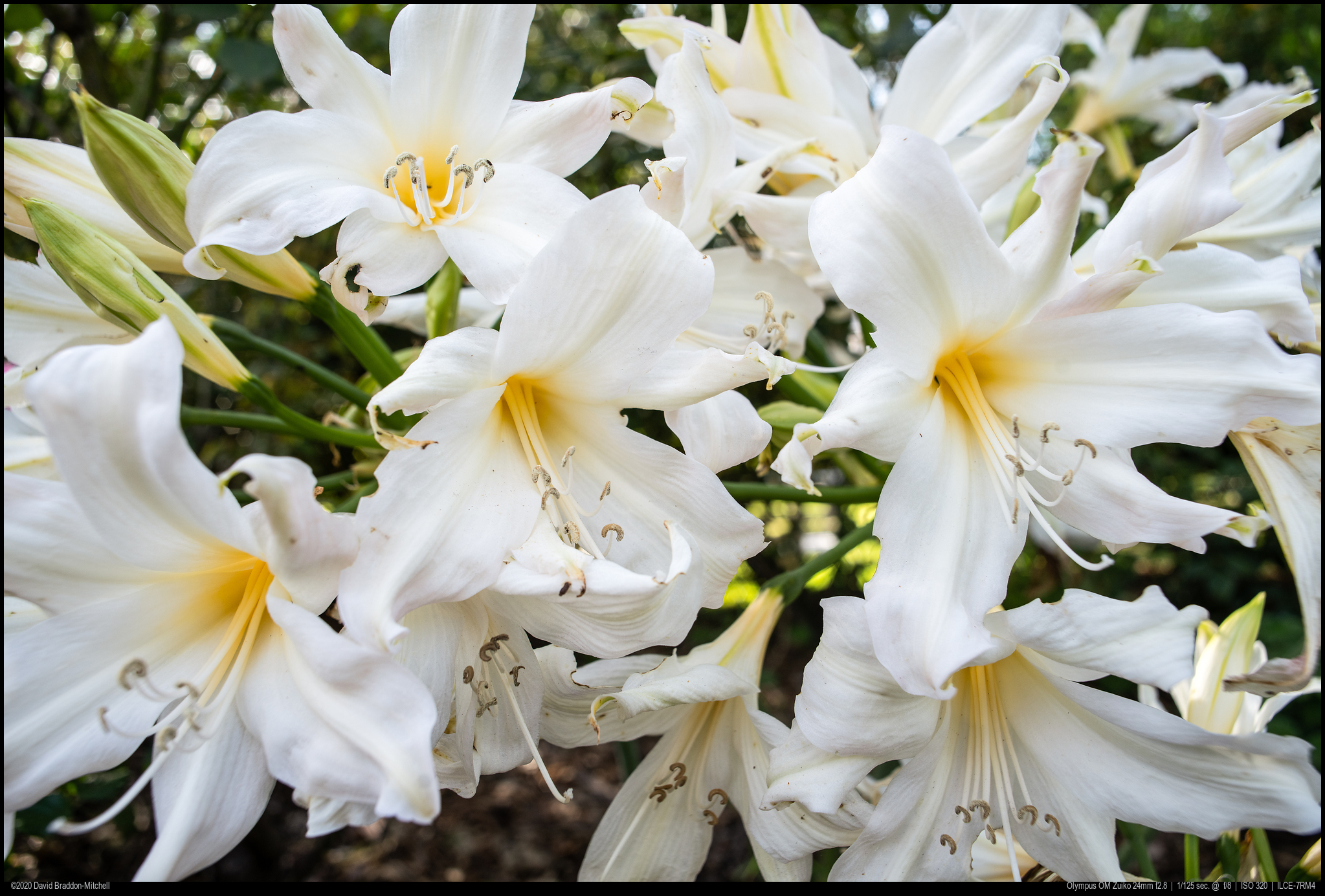
Status: Currently owned by David mainly for apply with infrared film on an OM body.
- Optically and mechanically the same as the Zuiko MC version
- Maybe slightly improve against the light
This is the final version of the 24mm f2.8; it is too multicoated simply it seems may have a new style of blanket – the then-called New Multicoating NMC. It certainly seems quite good against the light, but unfortunately we don't take admission to both this and the before one to compare them against each other. None of united states has tried the earlier H.Zuiko single coated version, but we suspect that in a lens of this width and complexity it would be very poor against the light. Both versions, by the way, are very skilful performers in the infra red, with no hotspotting.
180g | $150 | Ebay.com (chapter link)
The Fast Super Wides: ii/21 and 2/24
I take used these briefly in the past. They are very expensive now, and in fact optically neither are as good as the slower lenses, while still fine eyes. Since their wide open up performance is a chip iffy, I don't think they make sense for digital. For film, the actress speed makes them easier to focus accurately, which might for some make information technology worth the extra cost, size and slightly lower stopped down quality.
250g | $600 | Ebay.com (affiliate link)
275g | $370 | Ebay.com (affiliate link)
Olympus Zuiko MC 28mm f2
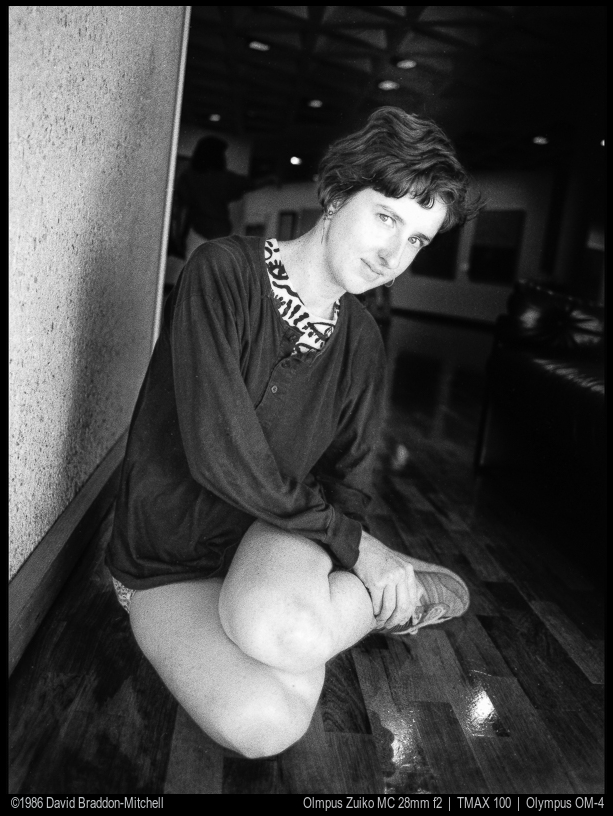
Condition: Bought by David and used in the days of Motion picture. Bought by Phillip for review. David has a after version now for retro fun with film, just hasn't used it much withal.
- Decently sharp centrally at wide apertures, quite precipitous across the field stopped down. Some sample variation.
- Soap chimera bokeh in high contrast back-lit situations with specular highlights.
- Subsequently versions appear to practise amend in backlight, all versions are better than you would expect for a fast wide of the era.
An interesting lens that someone who likes the look of vintage fast wides might well invest in, every bit it handles flare improve and is sharper than about fast wides of its era, whilst retaining that look to the bokeh. Not that cheap, and so if you are just looking for a lens with no particular interest in classic lenses, the Sony 2/28 is a better bet. Although I accept a later NMC version, I've non notwithstanding tested it.
240g | $200 | Ebay.com (affiliate link)
Olympus Thousand.Zuiko 28mm f3.5
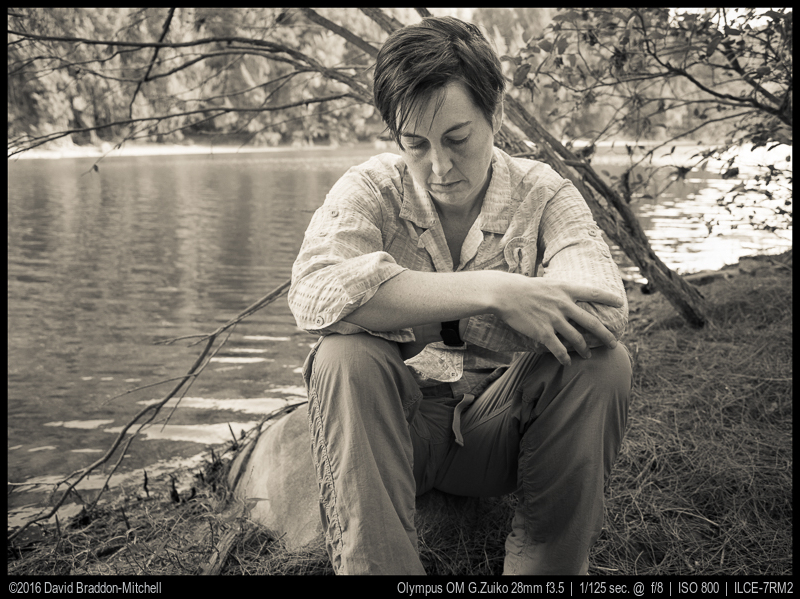
Status: Bought past David in digital era and even so in use.
- Very sharp across the field from one full cease down.
- Pocket-size and compact.
- Average for the era command of flare and backlight.
- Quit adept dissimilarity when lighting conditions favourable.
This lens is reputed to be sharper than its replacement, the 28mm f2.8. Although I have used both, we haven't had them together to test so we can't confirm that. I can confirm though that the later lens handles flare a chip better, though this 1 is non besides bad because information technology is probably not fully multicoated. This lens is however very sharp indeed, and well priced, and a practiced choice for someone looking for an cheap but sharp 28 for their kit.
180g | $60 | Ebay.com (chapter link)
Olympus OM Zuiko 28mm f2.8

Status: Bought and used by David in the days of flick. Not function of current kit.
- Very precipitous beyond almost of the frame. Possibly a tiny bit worse in the corners than the earlier f3.5 version, but we tin can't compare them side by side whatsoever more.
- Very high contrast and food flare command
- Very small
A nice lens which con be got cheaply and makes sense every bit a "educatee" purchase. Meliorate contrast than the f3.5, but as we say above, the rumour that information technology'south worse in the corners is something we can't verify. I always plant it remarkably sharp across the field
170g | $50 | Ebay.com (chapter link)
Olympus OM Zuiko MC 35mm f2

Status: Bought and used by David in the motion-picture show era.
- Quite dainty rendering in some situations
- Compact for an f2 35 of the era
- Useful sharpness just non amazing
- Bokeh wide open up tends to outlining with backlighting and specular highlights
I always plant this lens precipitous enough and decent corner to corner stopped down. But it has a poor reputation in some circles. If at that place is demand from readers and enthusiasm from us one of us may find a adept re-create to review fully. It'southward possible that the blueprint was modified for the last production runs: it's just a trivial longer — not enough longer to guarantee that it's a recalculation with the aforementioned rough structure as with some lenses, just the difference is greater than with some of the lenses nonetheless. This might explicate the disagreement.
240g | $160 | Ebay.com (affiliate link)
Olympus OM Zuiko 35mm f2
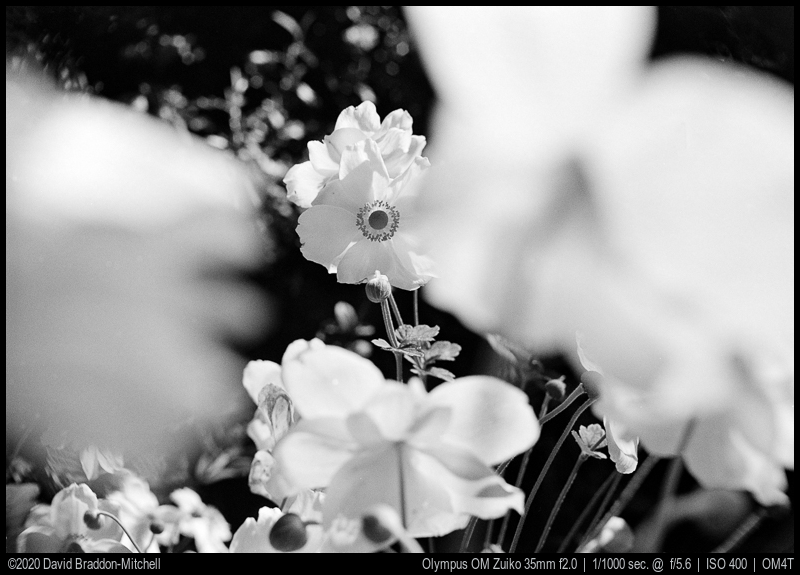
Status: Bought and used by David as vintage lens on digital, and occasionally for retro fun on an OM flick body.
- By and large the same as the Zuiko MC version
- Slightly better contrast than the non multicoated version, merely non a large divergence.
This is the final version of this lens. We don't know it it was optically changed, merely we doubt it. So probably the only difference is coatings. The oldest version, the H.Zuiko, was single coated, and given the design probably had dissimilarity bug as a upshot. It'south also very rare, considering Olympus introduced multicoating to this lens very early on – a "silver nose" version tin be plant marked Zuiko MC.
Information technology's unclear when the redesign happened (and whether the redesign was only mechanical). Certainly the silver nosed versions, fifty-fifty marked MC, are the older body. I don't know if the new design starts with the black torso MC, sometime during the black body MC era, or with the new multicoating marked by MC existence removed from the front band.
240g | $250 | Ebay.com (affiliate link)
Olympus OM Zuiko 35mm f2.eight
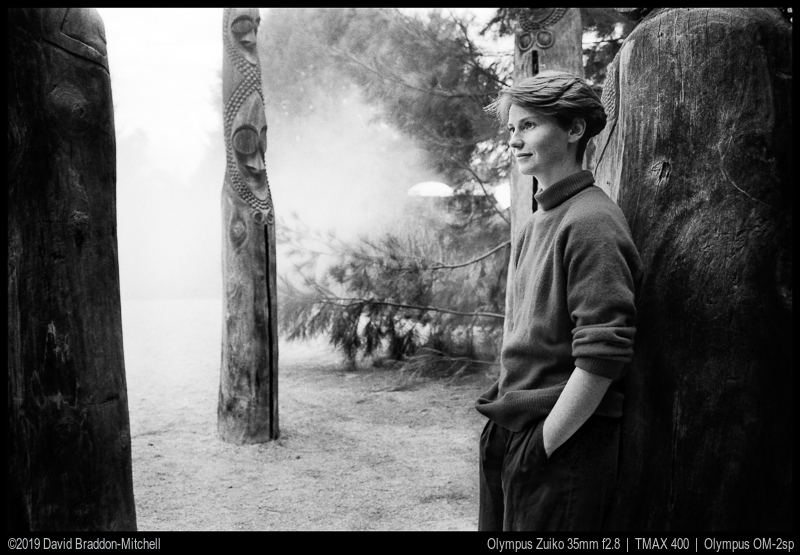
Status: Bought and used by David in the picture era.
- Low cost
- Meaty
- Later models precipitous over most of the field by f5.vi
- Subsequently models somewhat sharper than the f2 version.
This lens is pretty cheap. We think that the afterward version must be redesigned equally it is considerably larger and heavier than the original version. If you are not looking for a heavily vintage look it might pay to expect for that version – with the plain "zuiko" characterization. On the other hand if you are looking for something far from the modernistic look (and if you were existence tough you lot might say that the afterward version looks like an average modern lens, rather than a vintage 1) you might adopt the old 1.
170g | $80 | Ebay.com (chapter link)
Olympus OM Zuiko SHIFT 35mm f2.eight
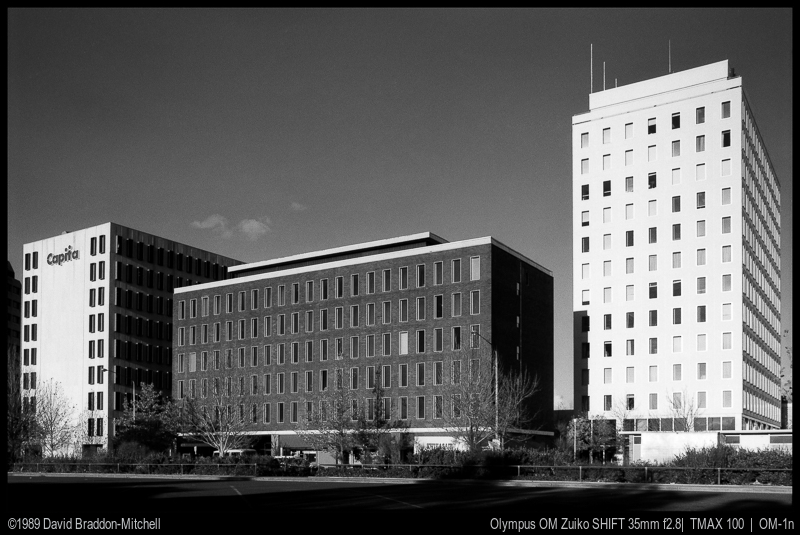
Status: Bought and used by David in the moving-picture show era.
- Relatively inexpensive mode to get into shift lenses
- Decent central resolution
- Edge resolution poor when anywhere near maximum shift
The only reason to get one of these is to experiment with shift lenses (or if you think old Zuikos are cool). Dorsum in the day, when digital perspective control was impossible, information technology was a godsend. I loved this lens. Simply the IQ is not good enough to compete with using a slightly wider lens and correcting perspective in your software of choice, much less a contemporary shift lens. On the other hand if y'all are using picture show information technology even so makes good sense.
310g | $300 | Ebay.com (affiliate link)
Olympus Zuiko 50mm f1.2
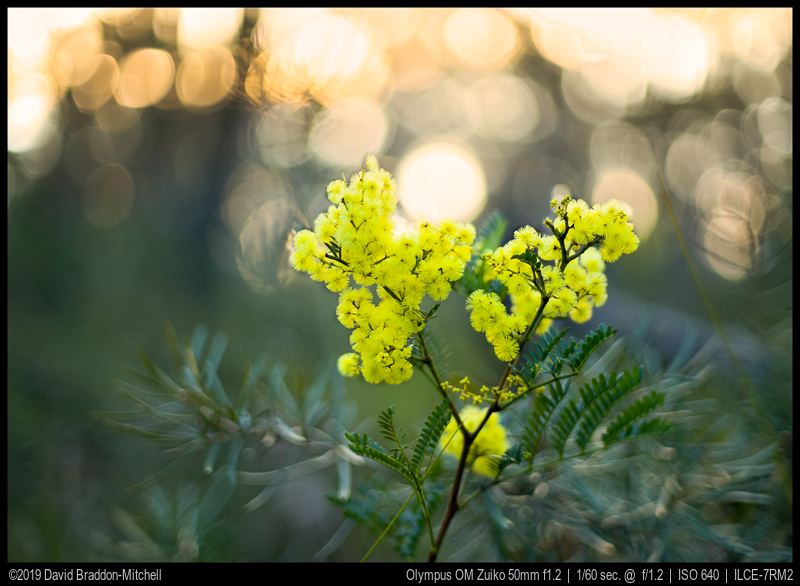
Status: owned and used by David in the digital era.
- Interesting "classic" fast fifty bokeh at wide apertures
- Usable broad open
- Quite precipitous stopped down
- Nice size and weight compared to other f1.2 fifties
- Can be expensive, expect for a skilful deal
This lens gives y'all f1.2 fun at wide apertures, and stops down to be an excellent all round l with non too much weight punishment. There are only two reasons to consider information technology. One is that you want the classic f1.2 fifty await. In which example it's ane of the all-time options. The other is that yous are looking to save coin and still become f1.2. In that case yous will need to discover a deal. The CV ane.2/50 is a much better and smoother lens, and if smoothness, resolution and contrast are what you would prefer, that would be a improve bet unless yous tin get this lens at a bargain toll. I have a lot of fun with this, though! There is an older version I haven't used: the 55mm f1.2. Information technology is reputed to be less abrupt and contrasty, and also to accept been crazier bokeh. But these might all be features y'all want for some use cases!
373g | $450 | Ebay.com (chapter link)
Olympus Grand.Zuiko 50mm f1.4
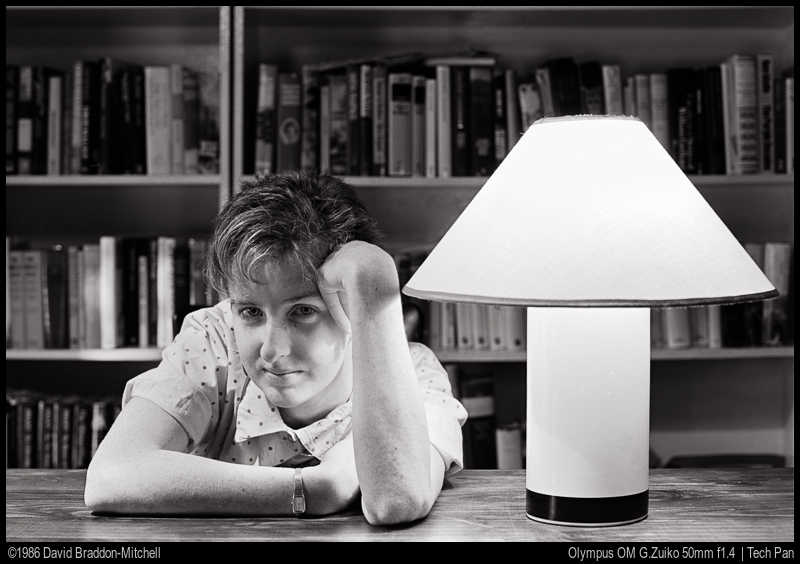
Status: Endemic and used extensively by David in the film era. Sold in the film era to upgrade to never version.
- Expert bokeh for a classic double gauss 1.4/50
- Very good sharpness stopped down a stop or two
- A piddling hazier broad open than later version but even so comparable to virtually classic 1.four/fifty lenses
- Inexpensive and a very good choice for film or if on a budget
This earlier version of the classic 50mm lens is a good all round fifty, if not quite equally practiced every bit the more expensive series no >1.1m version. The black nose and silvery nose version of the Thou.Zuiko are simply cosmetically different as far as we can tell.
230g | $60 | Ebay.com (chapter link)
Olympus Zuiko 50mm f1.iv
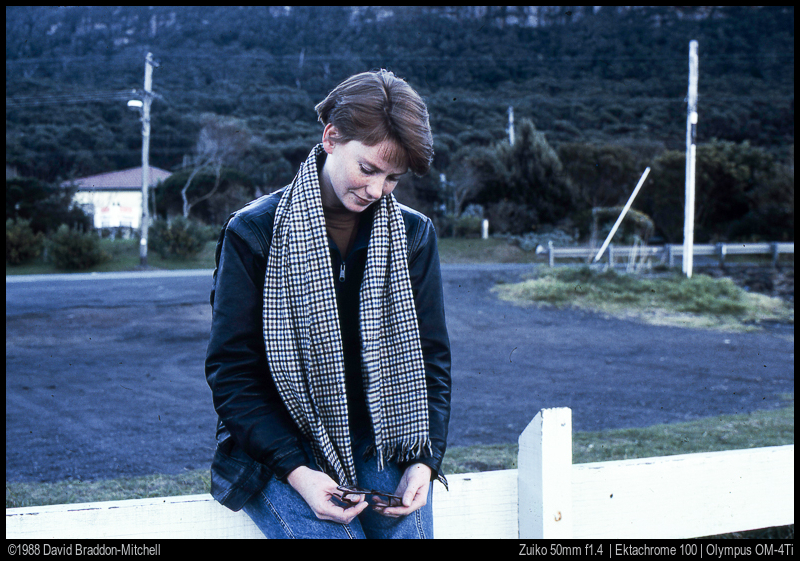
Status: owned and used by David in the picture era. New re-create in occasional use on digital and motion-picture show.
- Adept bokeh for a classic double gauss i.4/50
- Tardily version has very adept central and midfield sharpness wide open for a classic 1.4/50
- Amend LoCA correction than even some modern lenses
- Sharp across field stopped down, but not modernistic abrupt
- Nice size and weight
- Good option if you lot are looking for a archetype 1.4/fifty, equally it's ane of the better ones and smaller than virtually
This is a lovely classic standard lens, but it comes in many versions. This last version has both the latest coatings and a different optical design (from serial number 1.1 million on say many). The heart version none of us has used marked "Zuiko MC" is fully multicoated, just may or may not have the last optical design. This version is a little better at broad apertures than the early on ones.
240g | $180 | Ebay.com (chapter link)
Olympus F.Zuiko 50mm f/1.8
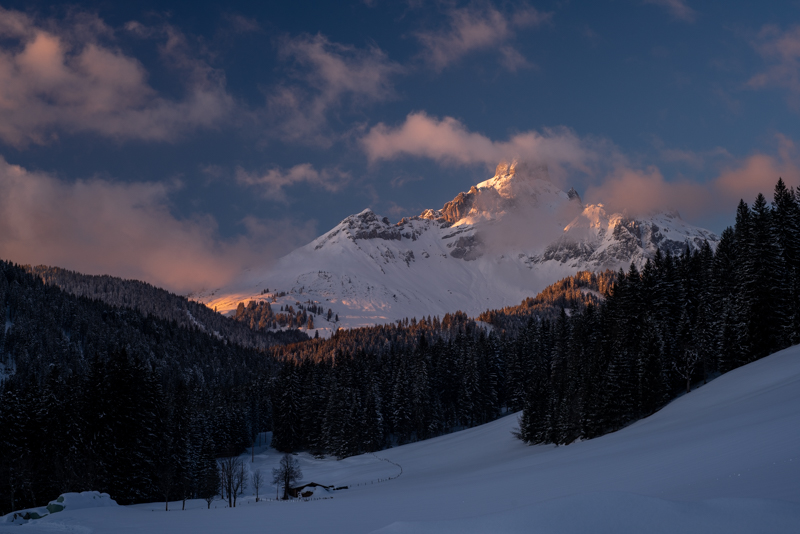
Condition: Currently owned by Juriaan and used from time to time.
- Very small and light
- Very sharp from border to edge stopped down with barely any LaCA
- Good bokeh near minimum focus distance
- Not precipitous broad open up, particularly away from the middle
- Corners never get really expert
- very bad flare resistance
The first design of the Olympus 1.8/50 serial. Sharpness is not not bad and due to archaic coatings flare resistance is horrible.
At longer distances bokeh is nervous with loads of outlining, however virtually MFD bokeh is very smoothen. The F.Zuiko ane.eight/50 tin can be institute inexpensive and is a overnice lens to walk around with due to its express weight. If y'all like the bokeh rendering a lot but you lot are looking for a sharper lens and better coatings, check out the latest version.
170g | $50 |Ebay.com (affiliate link) | review
Olympus Zuiko 50mm f1.eight
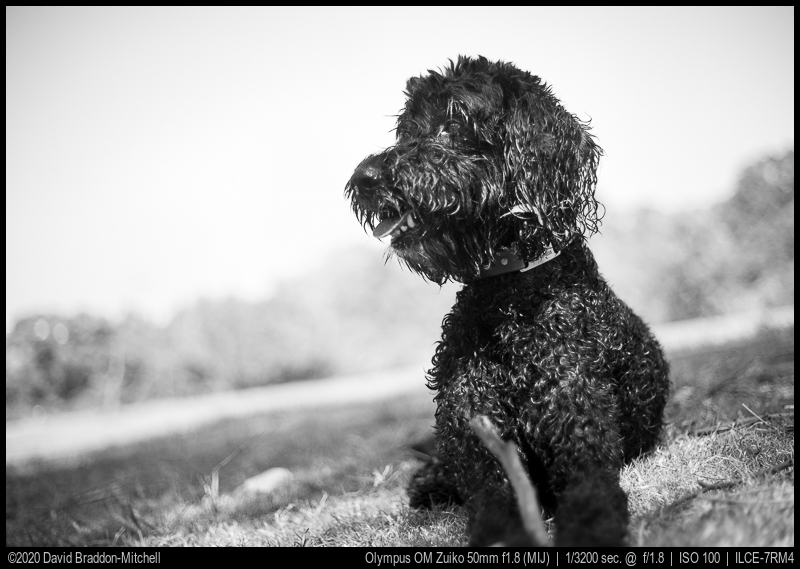
Status: owned and used by David in the motion picture era, some other copy currently owned by David for picture and digital use.
- Very small-scale and light
- Very sharp from corner to corner stopped down.
- Depression LaCA
- Good bokeh at close distance
- Decently precipitous in a large cardinal region wide open
- Expert corners
- Decent performance against the low-cal
The optical design as well as the coatings were changed on the basic 50mm lens at some signal. Exactly when is unclear, but the scuttlebutt is that the lenses that say just "Zuiko" with no "MC", and which say "Made in Nihon" are of the last pattern. I think it's safe to say that all such lenses are the later on one, possibly some earlier ones are too, only mayhap not. Y'all will have to look through eBay advisedly to find 1. Our chapter link will eliminate the F.Zuiko versions, and virtually Zuiko MC but look at the front ring in the motion-picture show before ordering/
Information technology's a dandy lilliputian standard lens. Has slightly distracting bokeh by some lights, but it's sharp in a decently big central area even broad open, and gets very precipitous stopped down. A very sensible lens if you are playing with film on an OM, and an inexpensive fast transmission fifty for digital, that is probably plays in a similar league optically than the cheaper modern ones.
170g | $50 | Ebay.com (affiliate link)
Olympus Zuiko 50mm f2 Macro
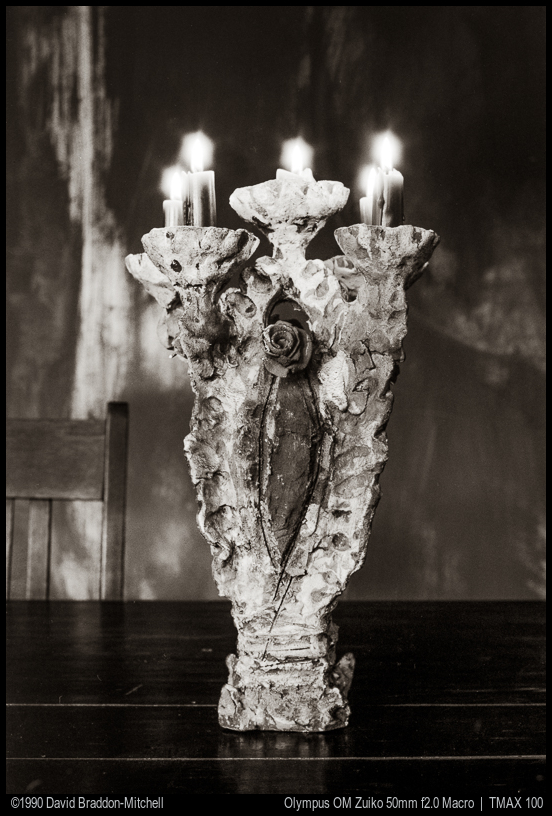
Status: owned and used by David in the film era.
- Outstanding dissimilarity and colour at all apertures and distances
- Adept macro performance at 1:two
- A little smaller than eg Zeiss Makro-Planar 2/50 while in the same class
- Suffers from collector premium
One of the concluding generation of very high operation Zuikos this lens had bully performance, although it was not as meaty as most zuiko lenses. It can sometimes exist had at a price that makes it competitive with the very like Zeiss Makro Planar Classic two/50. Either is a very nice optic on Sony; get whichever is cheaper.
320g | $350 | Ebay.com (affiliate link)
Olympus Zuiko MC 50mm f3.5 Macro
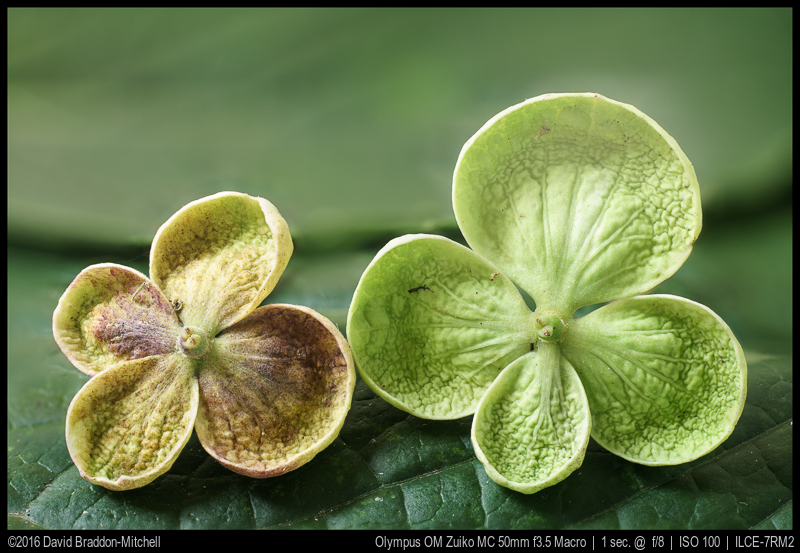
Status: owned and used by David in the digital era. Owned by Phillip and reviewed here.
- Outstanding lens at it'southward optimum magnification at 1:1
- Decent at ane:2 and infinity
- Small and compact
- Not every bit cheap as it was, just withal a nice affordable way to get a macro for Sony or for moving picture.
The image is fabricated with the MC version, merely all versions are very similar. It'southward a practiced sharp lens at normal distances, and ideal at one:x. It may non take the sparkle of the much more than expensive f2 version, merely of all the macro lenses of its era it's at least as skilful, and much more compact. A definite recommendation, and usually like shooting fish in a barrel to observe and non besides exepensive
200g | $70 | Ebay.com (affiliate link)
Olympus Thousand.Zuiko 55mm f1.ii
This is a bigger lens, with 55mm filter threads, and not every bit precipitous as the afterwards 50mm f1.2, and has fifty-fifty funkier bokeh. None of united states has used it extensively, but our sense from samples and other sources is that it's only for people who want to experiment with crazy bokeh. Equally a user lens for well-nigh purposes the 50mm f1.2 is preferable.
310g | $300 | Ebay.com (affiliate link)
Olympus F.Zuiko 85mm f2.0
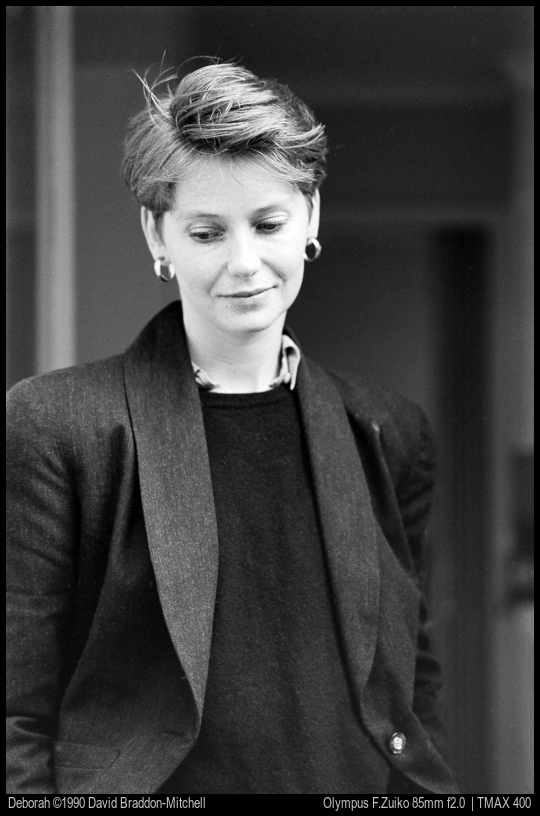
Condition: Bought and used by David in the motion picture era
- Very small-scale
- Nice bokeh
- Not as precipitous as later 1, but some prefer it
This is the offset version of the lens, a 6 element Sonnar design. It'south a little soft wide open compared the the later on (Merely five element, just sharper version). Some people prefer this for portraiture, and call up it has a "truthful sonnar" look. I had the old version, and now the new, and I tin can't tell anything about the look really except a little more resolution in the centre wide open in the new one (and the expected effects from more modernistic coatings.
260g | $220 | Ebay.com (affiliate link)
Olympus Zuiko 85mm f2.0
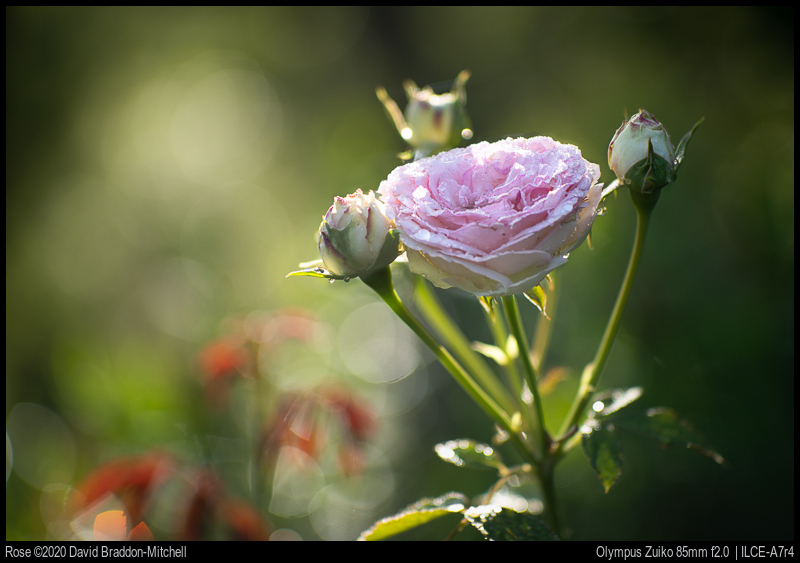
Status: Bought and used past David on digital and for retro fun on picture
- Very small
- Squeamish bokeh
- A little sharper and ameliorate contrast than previous version
This is the subsequently v element redesign. Don't fall prey to the assumption that just because it has fewer elements information technology's worse. As time goes on designs improve and so you tin get meliorate or the same functioning with fewer elements. In that location is no evidence that after redesigns were the result of cost cutting. It seems to me to have the aforementioned bokeh as the previous version, and a fleck ameliorate resolution and dissimilarity, though some disagree. The "Zuiko MC" version has the afterward design likewise as this concluding version, just perhaps different coatings from the last version.
Whatever version makes a delightfully meaty little fast tele on digital or film.
260g | $260 | Ebay.com (affiliate link)
Olympus OM Zuiko 90mm f2
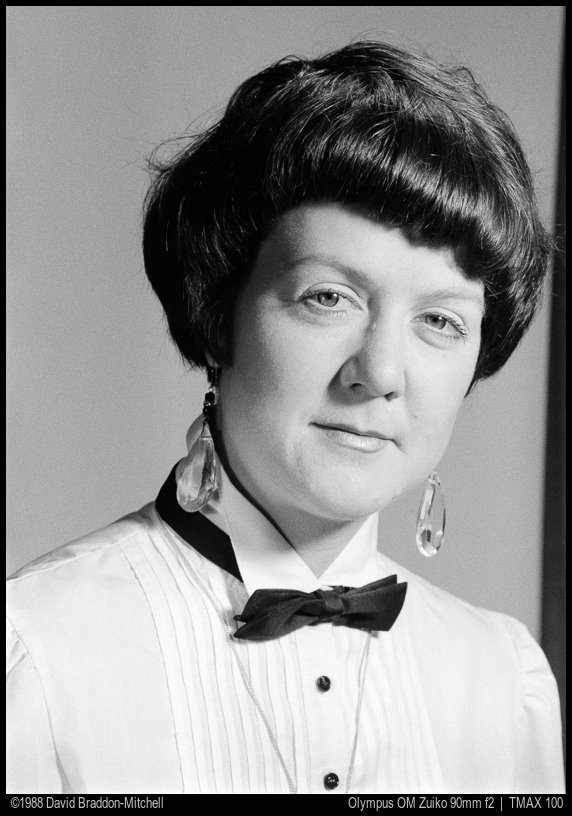
Status: Bought and used by David in the moving-picture show era
- Extremely sharp and contrasty
- Fantabulous at all distances
- Has 1:ii macro of high quality
- Bokeh slightly more distracting than 2/100 at longer distances
This lens is legendary; it was produced towards the end of the OM era and was role of a series designed to showcase their optical prowess. Information technology'south probably a better lens than the Zeiss Makro-Planar two/100 – information technology certainly has less purple fringing, and it's more than compact.
Just equally with a lot of these lenses, collectors have spoiled the party. Unless y'all find one cheap, y'all are probably better off with the CV Apo-Lanthar 2.five/110 which is better notwithstanding, and goes to i:one, and has contacts.
550g | $450 | Ebay.com (affiliate link)
Olympus OM E.Zuiko 100mm f2.8

Status: Owned and used back in the days of pic by David
- Very similar to later multicoated version (see next section)
This is a lovely little lens; see the next section for discussion of the multicoated version. This before version is basically the aforementioned: the lens is simple enough that multicoating makes very piffling difference, and the earlier F.Zuiko version can be had very cheaply. Highly recommended for film users, or anyone looking for a modest and inexpensive brusque tele for digital.
230g | $120 | Ebay.com (chapter link)
Olympus OM Zuiko 100mm f2.eight (Phillip)
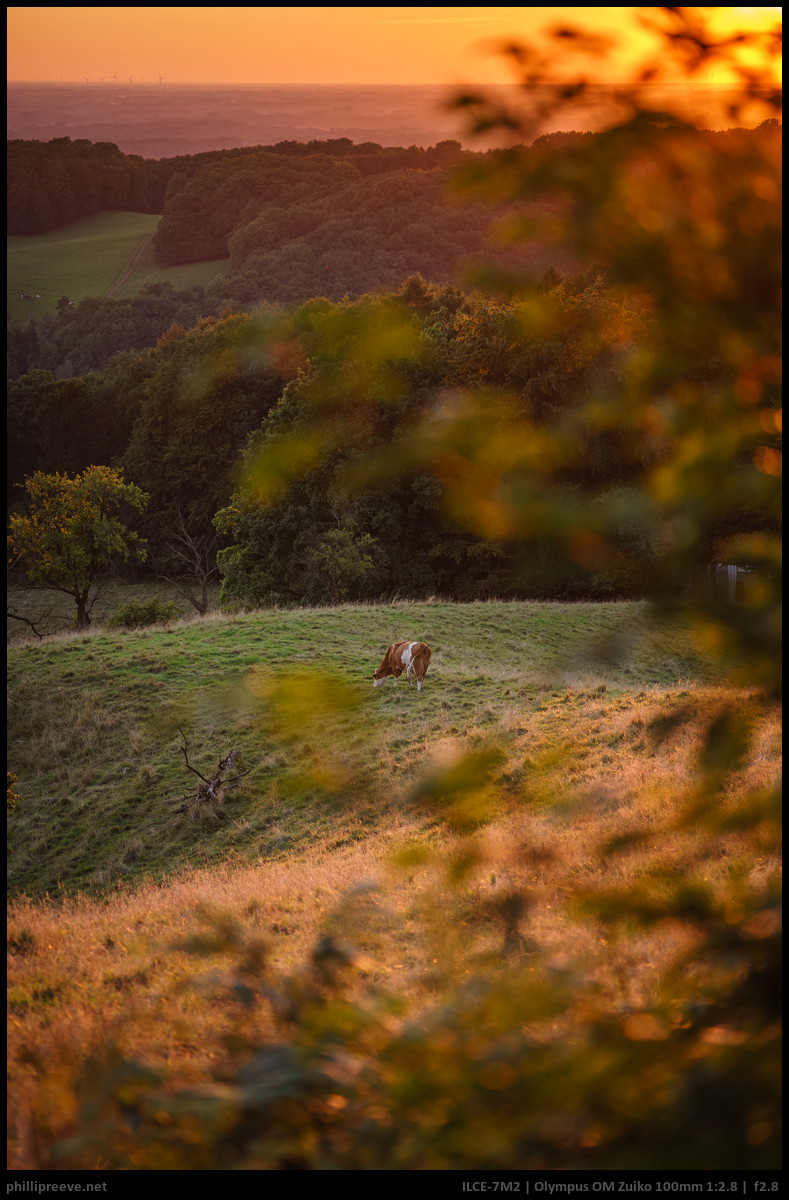
Status: Used on Sony a7 for two years past Phillip. Sold since.
- A tiny lens, no bigger than your typical 1.8/fifty
- Abrupt beyond the frame from broad open with decent contrast
- Practiced bokeh most of the time
- Stronger CA
- Very affordable
The Olympus OM ii.8/100 is a tiny lens with a by and large proficient performance and few limitations. I think information technology is a groovy choice for those occasions when you don't desire to bear a heavy bag. Despite these positive characteristics, the lens is quite affordable and I think it offers smashing value.
230g | $90 | Review | Ebay.com (chapter link)
Olympus OM 100mm f2 (Phillip)
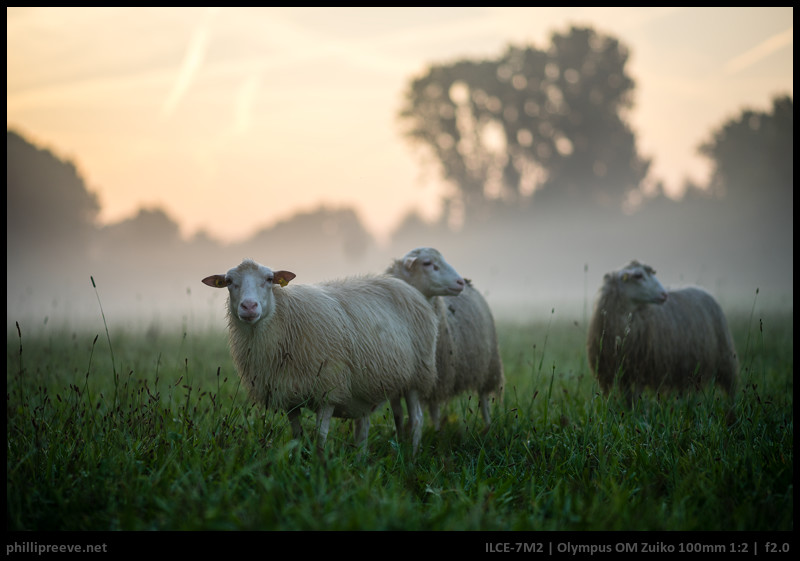
Status: Used on Sony a7II for ii years past Phillip. After the two.v/110 APO arrived it saw too little use and was sold.
- Very sharp across the frame from wide open with loftier contrast
- Outstanding bokeh
- Above average but far from perfect CA correction
- Focuses to lxx cm with good sharpness thanks to floating elements
An fantabulous lens which balances operation and handling really well. Its biggest competitor is the 2/ninety Macro which is a trivial sharper and focuses even closer simply the 2/100 has a little nicer bokeh and less steep focus throw.
Since it is a rare lens, prices are unremarkably unreasonably high which makes it difficult to recommend for bodily usage to any but die hard Olympus fans.
520g | $6-800 | Review | Ebay.com (chapter link)
Olympus OM Zuiko 135mm f3.5
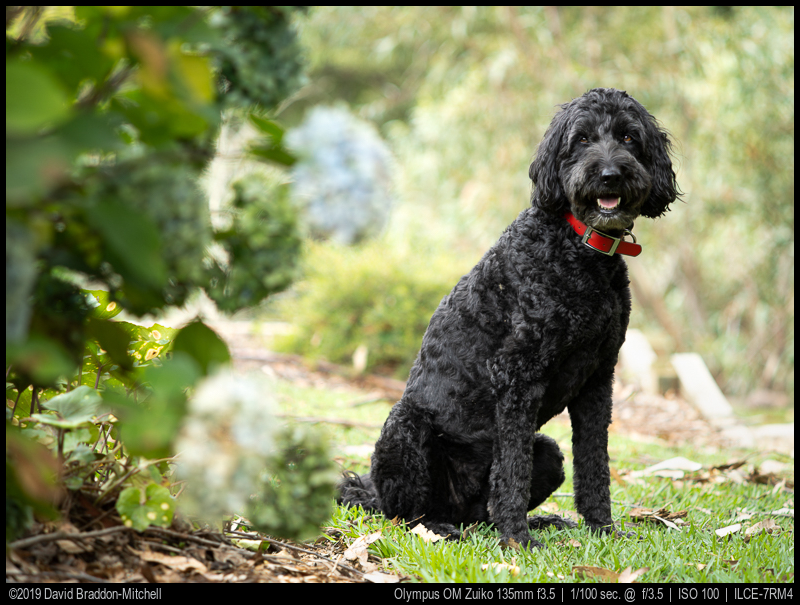
Status: Bought and used by David in the digital era
- Reasonably sharp across the frame
- Very sharp at close to medium distances, less practiced at infinity
- This version has loftier contrast
- Noticeable LoCA
- Cheap if you tin can find ane, and one of the smallest 135mm lenses
Quite a fun lens to employ because decently sharp and very modest. This version is very hard to discover, still. The E.Zuiko version which is widely and cheaply available is optically the aforementioned, we recall, and different mainly, or only, in coatings.
290g | $30 | Ebay.com (affiliate link)
Olympus Zuiko MC 135mm f2.8
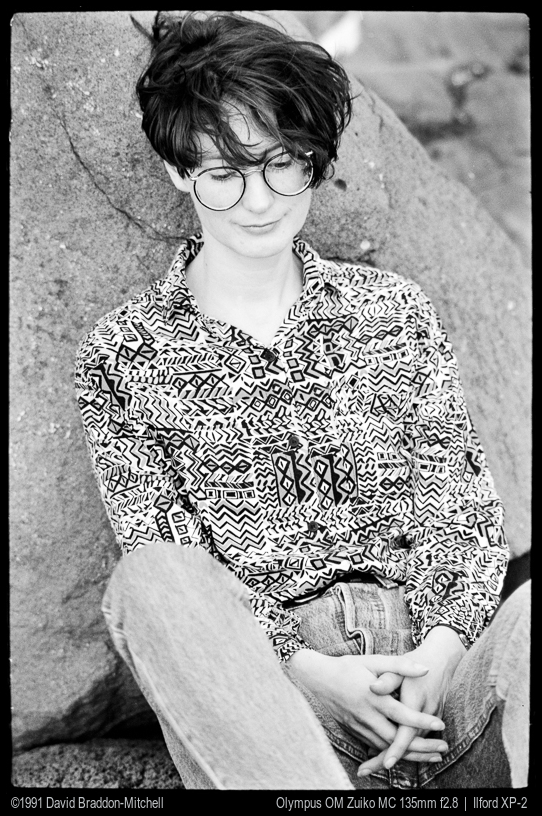
Condition: Bought and used past David in the motion-picture show era.
- Sharp and decent classic fast 135
- As with most classic not-Apo teles displays some LoCA but less than virtually.
- Nice Bokeh
This lens is not expensive, and while not equally good as say the Batis 2.eight/135 its a tenth of the price. If yous want a transmission f2.8 for occasional apply, and don't want to pay a lot of money this lens makes good sense. As far as we can tell there are no optical differences between versions, just coatings.
360g | $100 | Ebay.com (affiliate link)
Olympus Zuiko MC 200mm f4
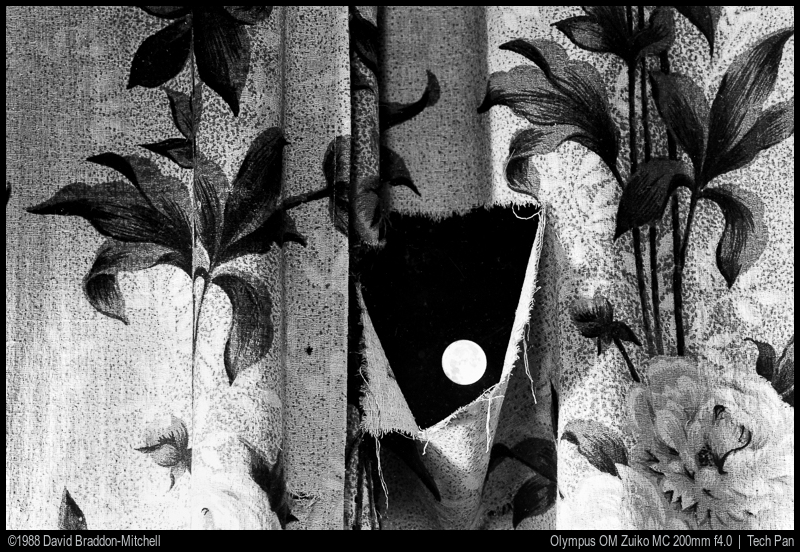
Status: Bought and used past David in the analog era. A later re-create now in utilize for digital.
- Decently sharp wide open and stopped downwards
- Not also big or heavy
- Equally with most archetype non-Apo teles displays some LoCA but less than most.
- Bokeh quality quite good (but limited in speed)
No-one makes a portable and small tele lens any more, as zooms rule the roost for this focal length. And so if y'all want such a lens you have to adapt. Probably the Apo-Lanthar 180mm f4 from CV is the best of the meaty options, just it is priced absurdly. This lens is very affordable, and might make a good stopgap for your kit. Of course you might adopt the fifty-fifty more compact f5 version, though finding a multicoated copy of that is very hard indeed.
490g | $60 | Ebay.com (affiliate link)
Olympus Zuiko 200mm f5
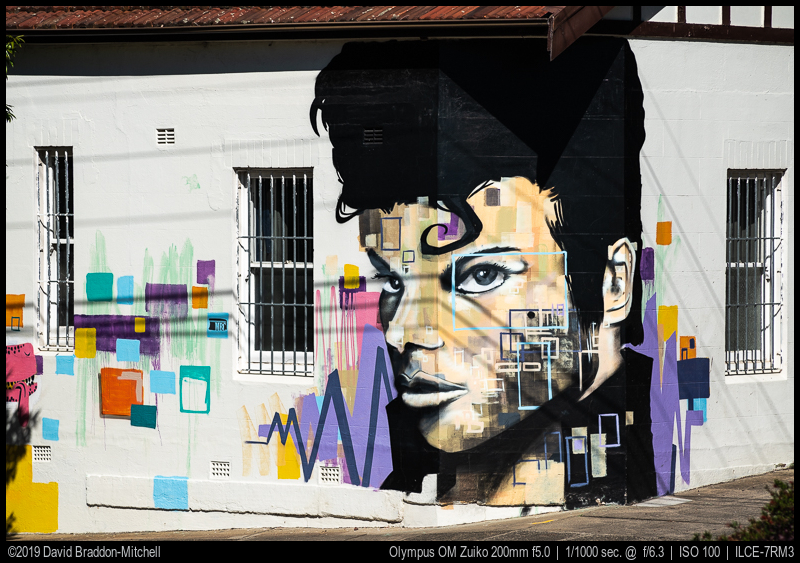
Status: Bought and in use on digital past David
- Decently sharp at all apertures
- Very compact
- Belatedly version fairly flare resistant
- Adept at infinity also as closer distances
This lens was designed for firmness, and it certainly succeeds. The optical blueprint, it seems, was slightly altered for the last run (the "plain Zuiko" run) and is slightly improve at some distances, and has better coatings than the early on ones. However the terminal version is very hard to discover. Ones for auction are about always the G.Zuiko version. They are pretty cheap, so it might be worth trying for your compact tele needs, or y'all may adopt to get the slightly faster (though larger) f4 versions, which is more easily found in a "Zuiko MC" or later on version. Information technology is a very small lens, so until someone makes a compact manual modern medium tele lens, this might brand sense stashed in a corner of your bag if you aren't a large tele user.
426g | $xc | Ebay.com (chapter link)
Olympus Zuiko 180mm f2 (Bastian)
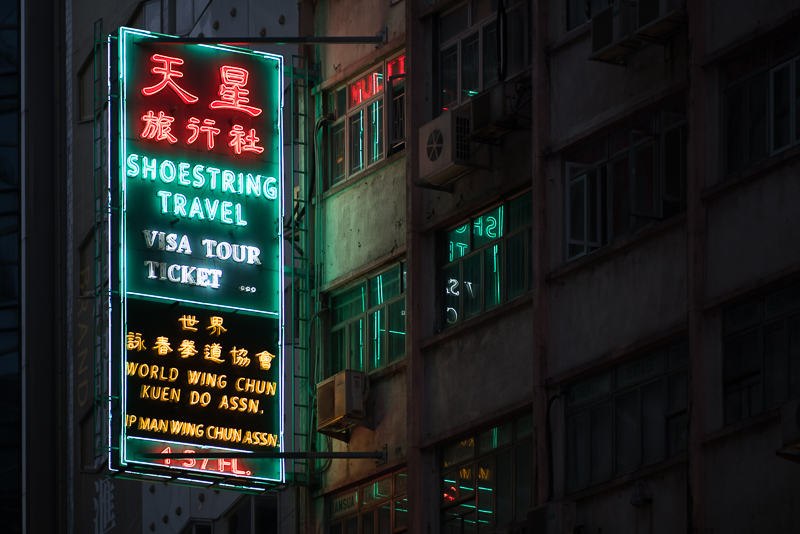
Status: Bought and sold by Bastian.
- Great build quality
- Really good minimum focus altitude
- Nice bokeh
- Very practiced sharpness at all distances (floating elements design)
- Average amount of vignetting, flare resistance and correction of longitudinal CA
- Very rare and expensive
Amazing design considering its age: ED element, great minimum focus altitude, surprisingly compact and lightweight.
Unfortunately this is a really rare lens which has just been produced in very pocket-size quantities. Therefore it is more often than not a collector's item and only sells for collector's prices.
For the price of a really good used one information technology is probably smarter to get a modern lens like the Canon EF 200mm two.0 L IS, but this doesn't have away from the fact that the Olympus 2/180 is an amazing lens.
Weight: 1900g | Filter Thread: 100mm (rare!) | Price: $2500+
Review | ebay.com (affiliate link)
Olympus Zuiko 250mm f2 (Bastian)
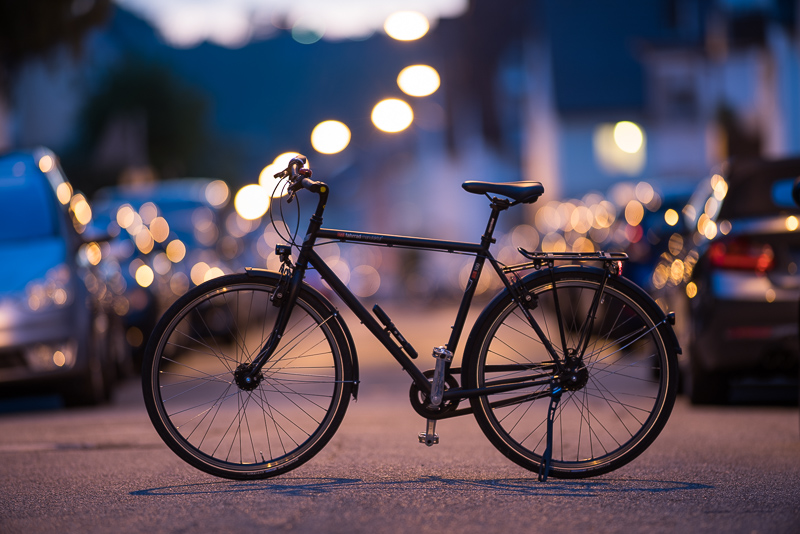
Status: Bastian could have a look at a faulty loaner.
- Smashing build quality
- comparably good minimum focus distance
- Amazing bokeh (specially amount)
- Very very rare and expensive
In many ways similar to the aforementioned 2/180, only an even bolder pattern and truly 1 of its kind. It is similarly hard to find as the 2/180, but even more expensive.
If you are into Brenizer this may be your holy grail lens, only these days most that are still in good status are certainly to be found in some collector's dry cabinet.
Weight: 3900g | Filter Thread: 46mm (slot in) | Price: $5000+
Easily on | ebay.com (affiliate link)
Olympus Zuiko 350mm f2.8 (Bastian)
The design is very similar to the two aforementioned lenses, but none of united states of america has used it personally yet.
It is the cheapest and easiest to go of these iii Olympus Super-Tele lenses, but it competes with some of the older Catechism ii.8/400 lenses which tin can often be found cheaper and therefore might be a more sensible choice.
Weight: 3900g | Filter Thread: 46mm (slot in) | Price: $2500+
ebay.com (affiliate link)
Olympus Zuiko Onetime-Style Telephoto lenses
Olympus made a range of big black older long focus style telephoto lenses. David has used the 300mm f4.5; it's fairly heavy at a kilo, and of good quality for its era but doesn't really brand sense as a user lens unless you find it very inexpensive. The longer lenses – 6.3/400, half-dozen.5/600 and eleven/1000 (!) are huge and heavy and slow – its hard to see a purpose for them in todays earth. They were near impossible to focus on motion-picture show, just a bit easier on mirrorless. I could well-nigh see someone using the 600 for wildlife if they could detect it inexpensive enough and were comfortable with manual focus.
Good luck in your search for Zuiko OM lenses! Whether you are looking for a loftier quality and meaty picture show system, cheap meaty neutral lenses for digital, or funky older fast lenses for the vintage look, there are OMs for y'all all!
Articles like this require many hours of work. If you lot found it helpful, you lot tin can support us by:
- Using one of our affiliate links if you lot purchase a lens (or anything else, nappies for mitt sanitiser maybe), it won't price you annihilation actress but helps us a lot.
- Sharing this commodity in social media
Other Articles
- All our other Guides
- Sony FE lens list with all current E-mountain lenses
- User-Guide to wide-angle lenses for Sony a7 series
- All our lens reviews
- Tripods for Mirrorless Cameras
- Backpack Review: Mindshift Gear Rotation 180° Horizon
- Affordable manual lenses for the Sony a7 series
The following two tabs change content below.
- Bio
- Latest Posts
David Braddon-Mitchell is a cracking landscape and environmental portrait photographer. In the final decade of film he was a darkroom practitioner and worked with Olympus OM SLRs and diverse medium format cameras. He switched to Canon DSLRs when digital imaging improved, and made a move to Sony bodies as presently every bit the A7 serial was born. He enjoys using a mixture of legacy manual lenses, modernistic manual lenses, and Due east mount AF lenses.
Source: https://phillipreeve.net/blog/guide-to-classic-olympus-om-zuiko-lenses-on-film-and-sony-full-frame/
0 Response to "Olympus E Zuiko Auto S 38 28 Review"
Post a Comment